
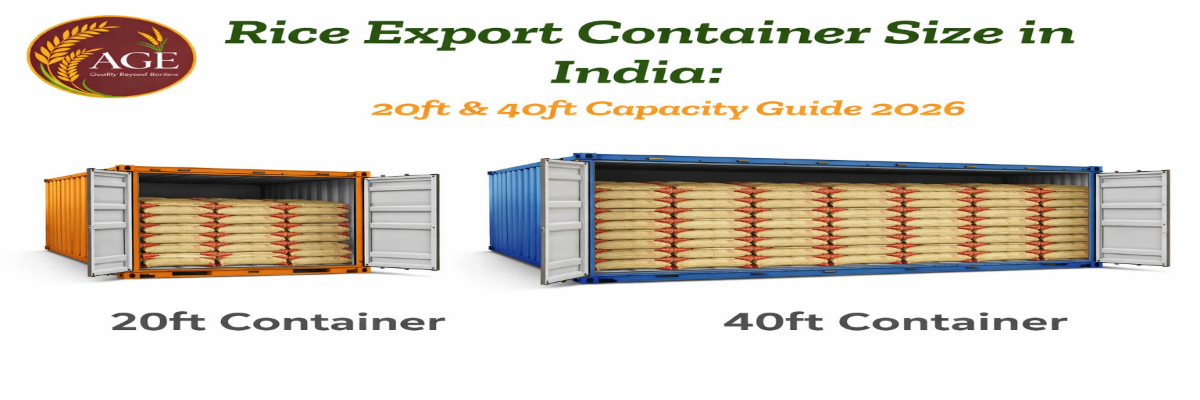
India is one of the world’s largest rice exporters, supplying Basmati and Non-Basmati rice to markets across the Middle East, Europe, Africa, and North America. Whether it is rice export from India to Dubai, the Gulf region, or Western countries like the USA and UK, understanding container capacity is critical for cost-efficient and compliant shipments.
However, exporters and overseas buyers often wonder how much rice will fit in a container and which container size is best when planning to export rice from India.
This guide explains rice export container sizes in India, container dimensions, weight limits, how many 50kg rice bags fit in 20ft and 40ft containers, and practical loading practices followed by professional exporters.
Why Container Size Matters in Rice Export?
Choosing the correct container size directly impacts:
- Export cost per metric ton
- Freight efficiency and compliance
- Risk of port rejection or penalties
- Buyer satisfaction and contract performance
For exporters shipping to high-volume destinations such as export rice from India to Saudi Arabia or bulk buyers in the GCC, container planning becomes even more critical. Furthermore, rice is a weight-restricted commodity, so exporters must follow international payload limits rather than volume capacity.
Common Container Types Used for Rice Export from India
Rice exports typically use dry standard containers, not refrigerated containers.
Most commonly used:
- 20ft Standard Container
- 40ft Standard Container
- 40ft High Cube Container (limited use)
As a result, these containers are widely used by Indian companies ranked among the top 10 rice exporters in India for both bulk and retail shipments.
How Many 50kg Bags of Rice in a 20ft Container?
A 20ft container is the most preferred choice for rice exports from India due to weight compliance.
Capacity Details (20ft Container)
- Maximum payload: 26–27 metric tons
- Standard rice bag size: 50 kg
- Total bags loaded: 500 to 520 bags
Practical Industry Standard:
Further, most exporters load 500 bags (25 MT) to maintain safety margins and avoid overweight penalties at ports.
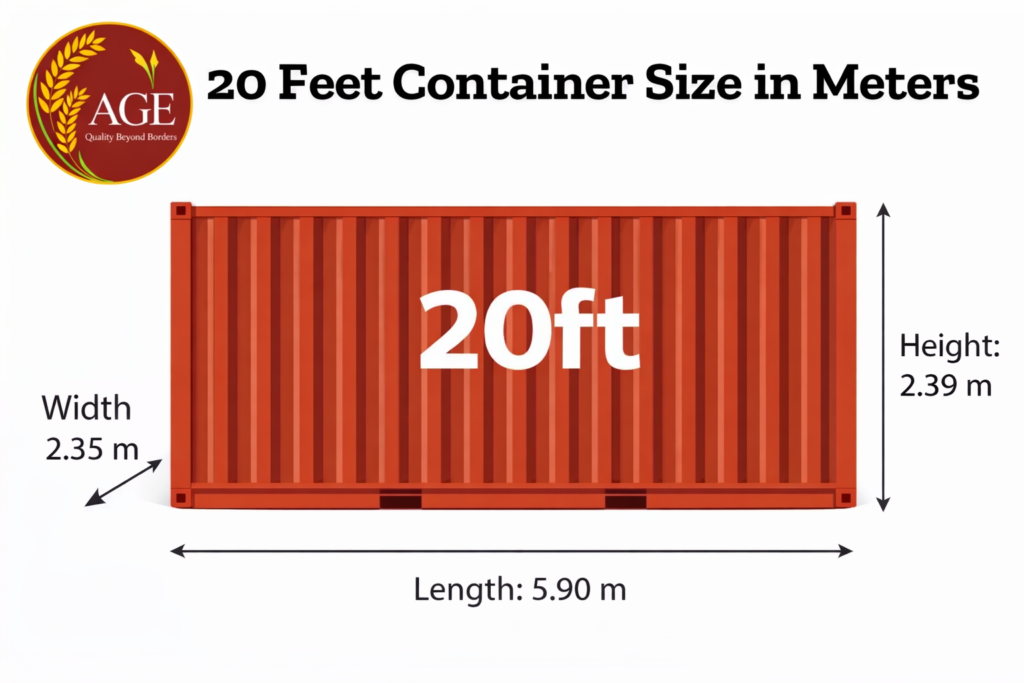
20 Feet Container Size in Meters
Understanding internal container dimensions helps ensure proper stacking.
20ft Container Internal Dimensions:
- Length: 5.90 meters
- Width: 2.35 meters
- Height: 2.39 meters
Additionally, rice bags are stacked floor-to-ceiling using cross stacking to distribute weight evenly.
How Many 50kg Bags of Rice in a 40ft Container?
Although a 40ft container has nearly double the length, rice exports are still limited by weight, not volume.
Capacity Details (40ft Container):
- Maximum payload: 26–28 metric tons
- 50kg bags loaded: 520 to 560 bags
In spite of this, many exporters prefer 20ft containers for heavy commodities like rice because of axle load and port regulations, even when shipping long distances like exporting rice from India to USA or exporting rice from India to UK.
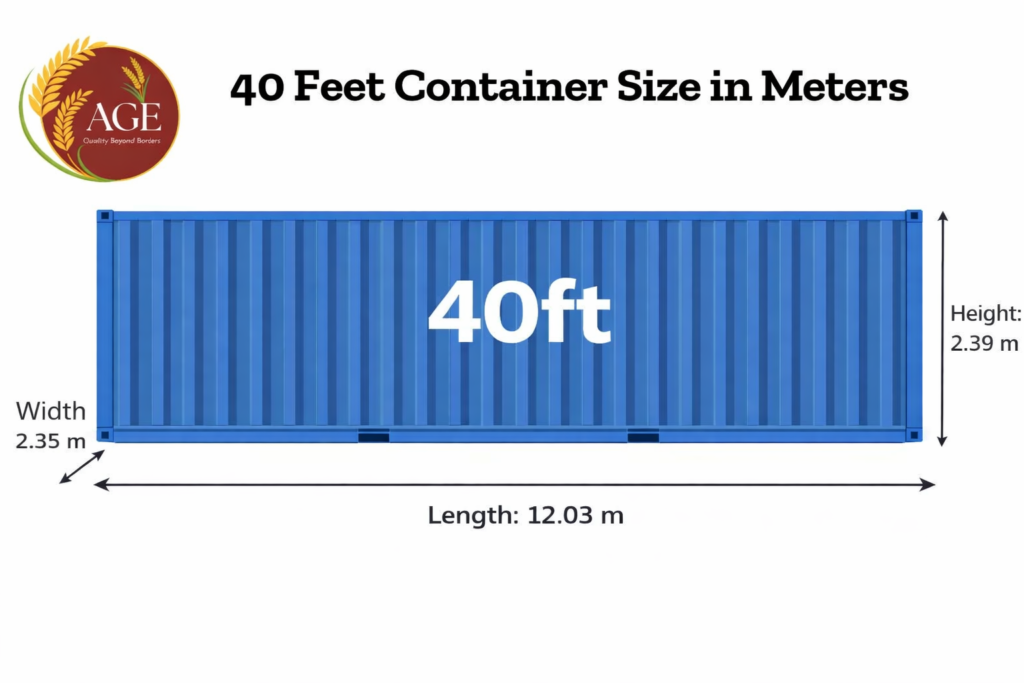
40 Feet Container Size in Meters
40ft Container Internal Dimensions:
- Length: 12.03 meters
- Width: 2.35 meters
- Height: 2.39 meters
Moreover, exporters cannot exceed the legal payload even if space remains unused after loading rice.
Rice Export Container Capacity in India
| Container Type | Internal Size (L×W×H in meters) | Max Payload | 50kg Bags Capacity | Export Suitability |
|---|---|---|---|---|
| 20ft Container | 5.90 × 2.35 × 2.39 | 26–27 MT | 500–520 bags | Most preferred |
| 40ft Container | 12.03 × 2.35 × 2.39 | 26–28 MT | 520–560 bags | Bulk contracts |
| 40ft High Cube | 12.03 × 2.35 × 2.69 | 26–28 MT | 560–580 bags | Limited use |
Rice containers are always weight-restricted, not volume-restricted.
Rice Container Capacity Calculation Formula
Exporters calculate container load using this simple formula:
Container Payload ÷ Bag Weight = Total Bags
Example:
25,000 kg ÷ 50 kg = 500 bags
Additionally, this calculation is universally used by professional exporters who export rice from India to global markets.
Does Rice Export Use 20ft or 40ft Containers?
Why 20ft Containers Are Preferred:
- Better weight distribution
- Lower risk of overweight penalties
- Easier handling at ports
- Ideal for government and bulk tenders
When 40ft Containers Are Used:
- Large export contracts
- Mixed agro-product shipments
- Buyer-specific freight preferences
Additionally, exporters shipping to distant markets like the USA and UK may use 40ft containers depending on their freight strategy.
Standard Bag Sizes Used in Rice Export from India
Indian rice exporters commonly use:
- 50kg bags – Bulk and institutional buyers
- 25kg bags – Retail and wholesale markets
- 10kg & 5kg bags – Supermarkets and branded exports
Additionally, bag size selection depends on the destination market and buyer requirements.
Container Loading Tips to Avoid Rejection at Destination Ports
Professional exporters follow strict loading practices:
- Maintain moisture level below 14%
- Use fumigated, pest-free containers
- Stack bags evenly to prevent tilting
- Follow port-approved payload limits
- Secure bags with proper lining if required
Furthermore, these practices reduce claim risk and shipment delays.
Which Container Size is Best for Rice Export from India?
| Export Requirement | Recommended Container |
|---|---|
| Regular rice exports | 20ft container |
| Government tenders | 20ft container |
| Large private contracts | 40ft container |
| Mixed cargo shipments | 40ft container |
For most exporters, 20ft containers remain the safest and most economical option.
Conclusion
Understanding rice export container size in India is essential for cost-effective, compliant, and successful exports. Moreover, since rice is a heavy commodity, exporters must prioritize weight limits over volume, making 20ft containers the standard for most shipments.
As a result, accurate container planning helps exporters reduce their risk, control their freight costs, and maintain long-term buyer relationships in global markets.
Export Rice with Confidence
At Auston Global Exim, we specialize in export-grade Basmati and Non-Basmati rice with optimized container loading, documentation, and global logistics support.
Connect with us to streamline your rice exports with precision and reliability.
Interested in Rice Export from India in 2026?
If you are planning to start or scale your rice export business, Auston Global Exim provides complete guidance on container selection, loading capacity, and export-ready solutions for smooth international shipments.
Get Latest Export Prices Request Samples on WhatsAppTalk to an Export Specialist.
Frequently Asked Questions (FAQs)
A standard 20 feet container can hold around 24–26 metric tons of rice, depending on bag size (25 kg or 50 kg), packaging, and stowage method. It is widely used for bulk rice exports from India.
In India, the cost of a 40 feet container typically ranges from ₹2.5 lakh to ₹4.5 lakh, depending on whether it is new or used, the container type, and current market demand.
A 20-ft shipping container usually costs between ₹1.8 lakh and ₹3 lakh in India. Prices vary based on container condition, location, and availability.
The most commonly used export container sizes are 20-ft and 40-ft.
- 20-ft container: 5.90 m (L) × 2.35 m (W) × 2.39 m (H)
- 40-ft container: 12.03 m (L) × 2.35 m (W) × 2.39 m (H)
The 20 feet container is the most popular for rice exports due to its optimal weight limit and ease of handling, while 40 feet containers are preferred for lighter or high-volume cargo.
Typically 500–520 bags in a 20ft container.
Because rice reaches the weight limit before space is filled.
Yes, but payload restrictions still apply.
Yes, overweight containers may be rejected or penalized.