
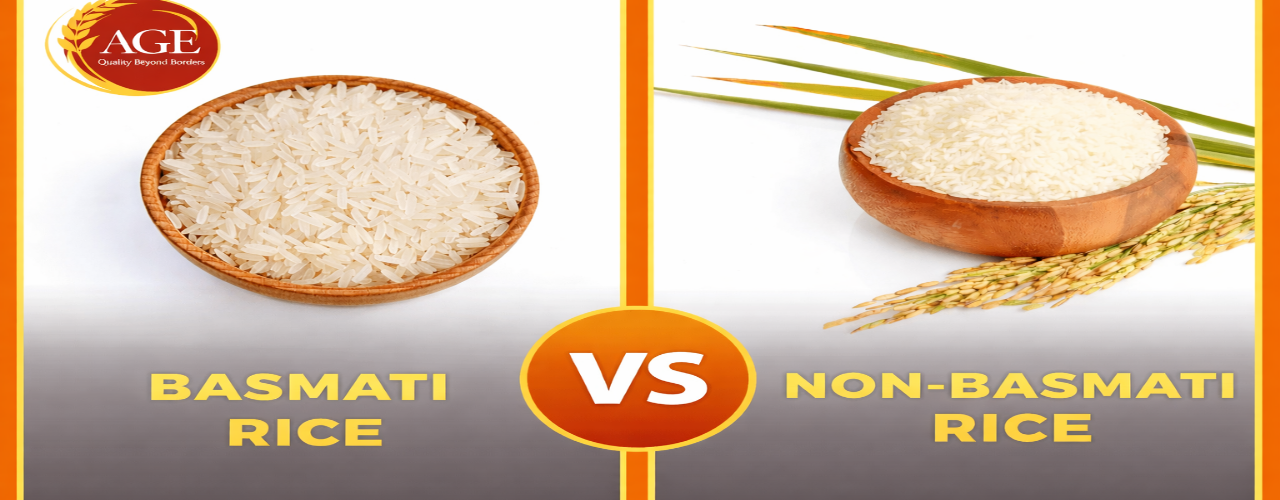
Rice is a global staple that has fun in countless dishes, and two large variants are Basmati and Non-Basmati rice. While they may work just at first glance, these two types of rice are quite different in textures, taste, nutritional materials and cooking applications. Also, whether you are a home cook, a restaurant owner, or a rice exporter, knowing the difference between Basmati rice and Non-Basmati rice can help you select the right variety for your needs.
This article will explore the difference between Basmati and non-Basmati rice, highlight the top rice exporting countries in the world and provide insight into the best rice for health and best biryani for health.
What is Basmati Rice?
Basmati Rice is a premium long-grain rice variant known for its aromatic scent and delicate texture. Furthermore, Basmati Rice is primarily grown in India and Pakistan, and it is used in South Asian dishes such as Biryani, Pilaf, and fried rice. The grains are slender, and long, and when cooked, give it a fluffy and non-sticky texture that is perfect for special occasions. Also, the 1121 Steam Basmati Rice and the Golden Sela Basmati Rice are popular variants among the associated people for their rich aroma and fine texture.
What is Non-Basmati Rice?
Unlike Basmati rice and Non-Basmati rice does not refer to all varieties of rice that do not fall under the Basmati category. These rice types may include short, medium, and long grains such as sona masoori, jasmine, and IR64. Non-basmati rice is often more cheap and is usually used in everyday cooking. In addition, it has a weak sticky texture compared to basmati, which is suitable for dishes such as fried rice, rice pudding, and daily foods.
Types of Basmati Rice
Basmati rice comes in several varieties, each offering unique features suited for different culinary applications. Some of the most popular types include:
Raw Varieties:
- 1121 Steam Basmati Rice
- 1509 Steam Basmati Rice
- 1401 Steam Basmati Rice
- Traditional Raw Basmati Rice
- Sugandha Steam Basmati Rice
Golden Sella (Parboiled):
- 1121 Golden Sella Basmati Rice
- 1509 Golden Sella Basmati Rice
- PR 11/14 Golden Sella Basmati Rice
- Sarbati Golden Sella Basmati Rice
- Sugandha Golden Sella Basmati Rice
Creamy Sella:
- 1121 Creamy Sella Basmati Rice
- 1509 Creamy Sella Basmati Rice
- Pusa Creamy Sella Basmati Rice
- Traditional Creamy Sella Basmati Rice
- PR 11/14 Creamy Sella Basmati Rice
Types of Non-Basmati Rice
Non-Basmati rice includes a wide range of rice varieties, each catering to different culinary needs. Some of the most commonly consumed Non-Basmati rice varieties are:
Common Varieties:
- IR 64 Raw Rice
- IR 64 Parboiled Rice
- Sona Masoori Steam Rice
- Sona Masoori Raw Rice
- Swarna Raw Rice
- Ponni Rice
Broken Rice:
Specialty Rice:
- Jeera Samba Rice
- Idli Rice
- Matta Rice (Kerala Red Rice)
- Black Rice
- Red Rice
Key Difference Between Basmati and Non-Basmati Rice
| Characteristic | Basmati Rice | Non-Basmati Rice |
|---|---|---|
| Grain Type | Long, slender, and separate grains | Short, medium, or long grains |
| Texture | Fluffy, light, and non-sticky | Stickier and softer |
| Aroma | Fragrant, nutty, and aromatic | Mild aroma |
| Nutritional Value | Rich in carbohydrates, low in fat | Higher starch content |
| Culinary Uses | Ideal for biryanis, pilafs, and special dishes | Used for everyday meals, fried rice, and puddings |
| Price | Premium and more expensive | More affordable than Basmati |
Basmati vs Non-Basmati Rice Nutrition Comparison
When choosing between Basmati and Non-Basmati rice, it’s crucial to consider their nutritional benefits. Basmati rice, particularly in its brown form, tends to offer more health advantages, especially in terms of fiber and glycemic index. Additionally, non-Basmati varieties of rice, such as Sona Masoori and IR64, are widely used for everyday meals and provide a versatile, affordable option. To help you make an informed choice, here’s a detailed nutritional comparison between Basmati and Non-Basmati rice:
| Nutrient | Basmati Rice | Non-Basmati Rice |
|---|---|---|
| Calories (per 100g) | Lower in calories, especially brown Basmati | Generally higher in calories |
| Glycemic Index (GI) | Lower GI (especially brown Basmati) – Better for diabetics | Higher GI, which can spike blood sugar levels |
| Fiber Content | Higher in fiber (especially brown Basmati) | Lower fiber content |
| Vitamins | Rich in B-vitamins like B1, B3, B5, B6 | Lower in vitamins |
| Minerals | Higher in minerals such as Iron, Magnesium, and Zinc | Lower in mineral content |
| Antioxidants | Contains more antioxidants (due to its aromatic properties) | Contains fewer antioxidants |
| Protein Content | Moderate to high protein content | Similar protein content, slightly lower than Basmati |
| Fat Content | Very low fat content | Similar low fat content |
Which Rice is Better for Health?
Both Basmati rice and Non-Basmati rice offer health benefits, but Basmati rice tends to be the healthier option, especially in its brown form. Additionally, it contains a lot of fiber and has a low glycemic index, which makes it an excellent option for diabetics or people managing their blood sugar levels. On the other hand, Non-Basmati rice varieties like Sona Masoori are also a healthy choice, offering moderate nutrition and energy content.
Conclusion
Whether you prefer the aromatic fragrance and fluffiness of Basmati rice or the more affordable and versatile options provided by Non-Basmati rice, both types are indispensable in kitchens worldwide. If you’re looking to make a premium biryani or an extravagant meal, 1121 Steam Basmati Rice and PR 11/14 Golden Sella Basmati Rice are excellent choices.
For everyday cooking, Sona Masoori rice or IR64 Parboiled rice are great alternatives that offer a delicious, budget-friendly option. Auston Global Exim, a trusted supplier of premium rice varieties, offers both Basmati and Non-Basmati rice options, ensuring you get the best quality for your cooking needs. Whether you’re purchasing in bulk or for personal use, Auston Global Exim is committed to providing you with the highest quality rice at competitive prices.
Frequently Asked Questions (FAQs)
Yes, Basmati rice is typically healthier due to its low glycemic index and high fiber content.
Basmati rice, particularly brown Basmati rice, is a better option for weight loss because it helps regulate blood sugar levels.
While Basmati rice is ideal for biryani, Non-Basmati rice can be used as a more affordable option in a pinch.
You can find premium Basmati and Non-Basmati rice at Auston Global Exim, where we offer a wide selection of high-quality rice at competitive prices.
The shelf life of uncooked rice is generally 6 months to a year when stored properly in an airtight container.
Basmati rice is not typically used for sushi. For sushi, short-grain rice is the best option due to its stickiness.
Brown Basmati rice is a better option for diabetic patients due to its low glycemic index and higher fiber content.
Have more questions about rice varieties? Contact Auston Global Exim for expert advice on selecting the perfect rice for your needs!